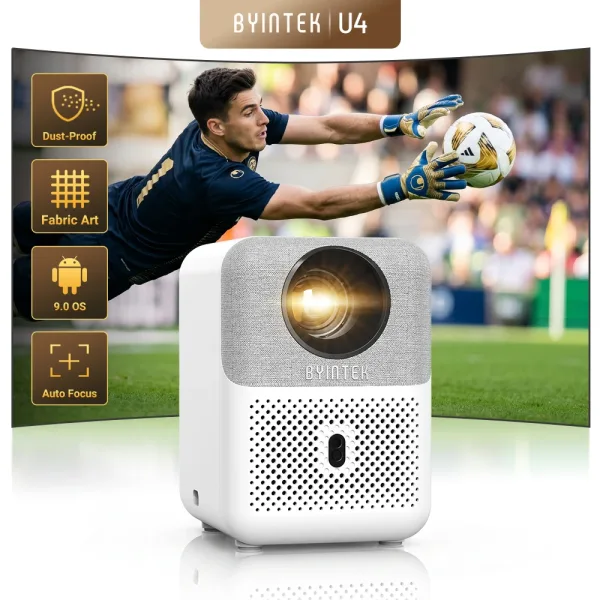
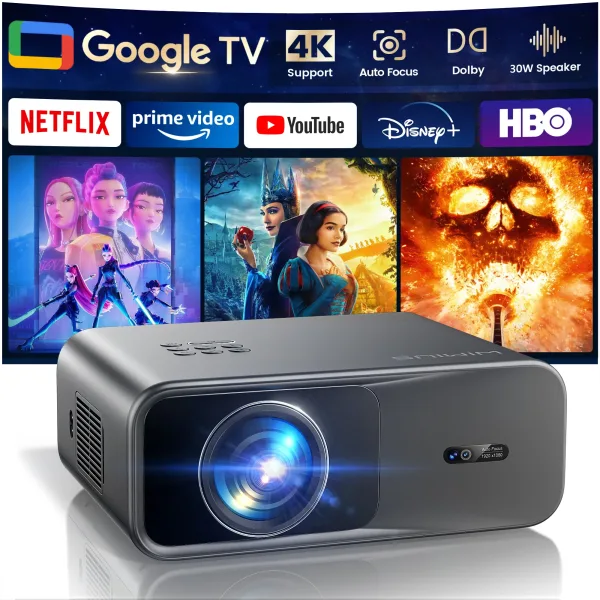
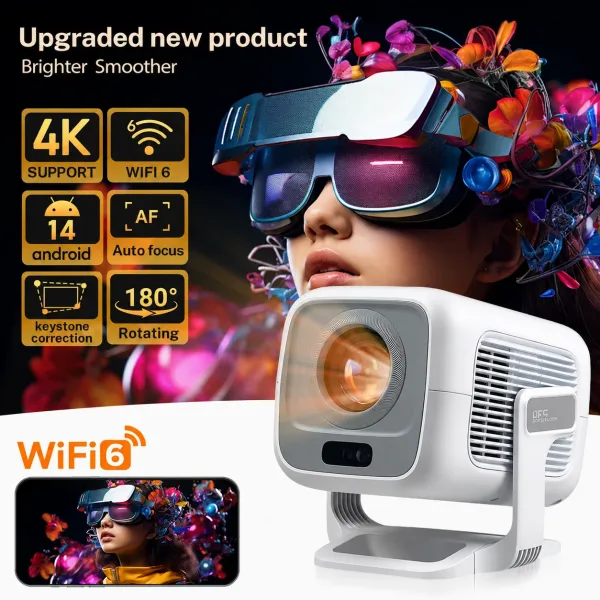
A projector turns a blank wall into a small cinema, and the price of a decent portable model has fallen so far that a movie night now costs less than a dinner out. Scroll AliExpress and you meet a wall of tiny boxes promising 4K, 12000 lumens and a picture the size of a garage door for the price of a pizza. Some of them genuinely brighten up a dark bedroom. Many are dim, blurry, or run a fan so loud it drowns the quiet scenes. Under $150 you cannot buy a true home cinema, so the smart move is to decide which two or three things matter for your room, then buy the projector that nails those instead of the one with the biggest number on the box. This guide shows you what a budget projector has to get right, how to match one to your space, and the quick checks that separate a keeper from a returns label.
Read also: Browse all Electronics deals · What to look for in a cheap water bottle · Best budget dash cam in 2026
What a budget projector actually has to get right
A portable projector has one core job: throw a bright, sharp, steady image onto your wall that you can actually watch without squinting. Everything else, the bundled remote, the fake leather finish, the built in speaker, is a bonus. A cheap unit earns its price when the image stays bright in a dimmed room, the focus holds across the whole picture, and the fan stays quiet enough to forget. Before you compare listings, decide where the projector will live and when you will use it, because a dark bedroom at night and a living room in the afternoon are judged on completely different things.
The specs that actually matter
- Native resolution: look for a real native 1080p panel; a listing that says "1080p supported" often hides a 720p or lower panel that only accepts a 1080p signal.
- Real brightness: ignore the giant lumen number and look for an ANSI lumens figure; 100 to 300 ANSI lumens is normal in this price range and is fine for a dark room, while a marketing "12000 lumens" means almost nothing.
- Throw distance: check how far the projector must sit from the wall to make the size you want; a short room needs a shorter throw ratio.
- Keystone and focus: automatic keystone and autofocus save a lot of fiddling, but manual focus is fine if the picture holds sharp corner to corner.
- Connectivity: confirm HDMI plus USB at least, and built in Wi-Fi or an Android system only if you do not plan to plug in a stick.
- Noise: a loud cooling fan ruins quiet dialogue, so scan the reviews for comments about fan noise before you buy.
One trap catches a lot of buyers: the headline lumen number. A palm sized projector with a single small LED cannot physically produce 12000 lumens, and that inflated figure usually hides a dim, washed out picture in anything brighter than a fully dark room. A model that honestly states 200 ANSI lumens will almost always look better than one shouting a five figure marketing number. When you browse the electronics deals, treat oversized brightness claims as a red flag, not a feature to pay extra for.
Match the projector to your room
Where and when you watch decides almost everything. If your only viewing happens at night in a bedroom you can black out, a modest 150 to 250 ANSI lumen projector will give you a big, satisfying picture on a plain white wall. If you want to watch in a living room with some daylight or lamps on, you need the brightest model you can afford and ideally a proper screen or a very white matte wall, because ambient light washes a cheap projector out fast. Measure the distance from your shelf or ceiling mount to the wall before you buy, then check the listing throw chart so the image lands at the size you actually want. A short bedroom may need a short throw model, while a longer living room gives you more freedom. You can compare a few options in the electronics category once you know your distance.
What your money buys on AliExpress
Prices move with flash sales, but the bands are steady. Around $40 to $60 you get an entry level 720p LED projector that is fine for casual cartoons or a garden movie night in full dark, but soft and dim under any light. From $60 to $120 you reach real native 1080p panels with better focus, automatic keystone and often a built in Android system for streaming apps. Above $120 to $200 you start to find brighter LED or even mini laser units with cleaner optics, quieter fans and a genuinely watchable picture in a dimly lit room. Spending more mostly buys you brightness, sharper optics and lower fan noise, not a magically bigger screen, so match the band to how dark your room gets rather than to the biggest headline size.
Quick checks before you click buy
A few checks save you from the worst listings. Confirm the native resolution in the specification table, not just the supported input. Look for an ANSI lumens number and be suspicious of any pure marketing lumen figure. Read recent reviews for the two things that photos never show: real world brightness and fan noise. Check that the box includes the cable and remote you expect, and that returns are possible if the panel arrives with dead pixels. Finally, plan your surface: even the best budget projector looks poor on a textured, off white or shiny wall, and a cheap white matte screen or a coat of projector paint lifts the picture more than the next spec tier would.
Frequently asked questions
Can a budget projector replace a TV?
In a dark room, yes. For movies and gaming it gives you a huge screen that no TV at the same price can match. But in daytime, with ambient light, a television stays more practical because a cheap projector washes out. Many people keep both: the TV for the day, the projector for movie nights in the dark.
What do the huge lumen numbers on AliExpress mean?
Almost always marketing. The figure that matters is brightness in ANSI lumens, and in this range 100 to 300 ANSI lumens is normal. A "12000 lumens" printed on the box is not measured against a real standard, so treat it as advertising, not a specification you can trust.
Do I need native 1080p or is 720p enough?
720p is fine for cartoons and casual use on a picture that is not too large. For movies, text and bigger screens, native 1080p looks much sharper. Watch out for the label "1080p supported", which often hides a 720p panel: look for the word "native" in the spec sheet.
Will the built in speaker be loud enough?
Usually it is thin and quiet, fine for casual use but not for a real movie night. Plug in a Bluetooth speaker or a soundbar for decent sound, and check that the projector has a Bluetooth output or a 3.5mm jack so you can link the audio without trouble.
Making the right choice for your space
A budget projector is worth it when you buy for the way you will actually watch: real native resolution, honest ANSI brightness matched to how dark your room gets, a quiet fan and the right throw distance for your space. Decide where it will live, ignore the five figure lumen claims, and put your money toward genuine brightness and a decent surface rather than a bigger printed screen size. Get that right and a projector under $150 will turn a plain wall into movie nights for years. Get it wrong and even a flashy bargain will sit dim and blurry in a drawer. Match the projector to your room and the cheap models are, for most home viewing, genuinely enough.