A pair of adjustable dumbbells replaces a whole rack of fixed weights with two handles and a stack of plates you swap in seconds. That is the promise, and for a home gym in a spare room or a corner of the bedroom it is a good one: less clutter, less money spent, and a full range of loads from a warm-up weight up to something that actually challenges you. AliExpress is full of them now, from ten dollar spinlock sets to dial systems that look like the expensive brands. Some are genuinely worth it, others are wobbly, rattly or overstate their real weight. This guide walks through how they work, what to check before you buy, and roughly what each price band gets you.
Read also: Browse all Sport deals · What to look for in a cheap water bottle · Best budget dash cam in 2026
Why adjustable dumbbells make sense for a home gym
The maths is simple. A single adjustable pair covering, say, five to twenty-five kilos per hand replaces ten or more pairs of fixed dumbbells. You save floor space, you save money, and you keep every load you are likely to need for the main home gym exercises: presses, rows, curls, lunges and shoulder work. For most people training at home two or three times a week, one good adjustable pair is the only weight equipment they ever really need. The trade-off is that changing the load takes a few seconds rather than being instant, and the hardware is more complex, so there is more that can wear or break. For steady home training that trade-off is easy to accept.
The three mechanisms: dial, pin and spinlock
Almost every adjustable dumbbell on AliExpress uses one of three systems, and the mechanism matters more than the brand name printed on it.
Which system to trust
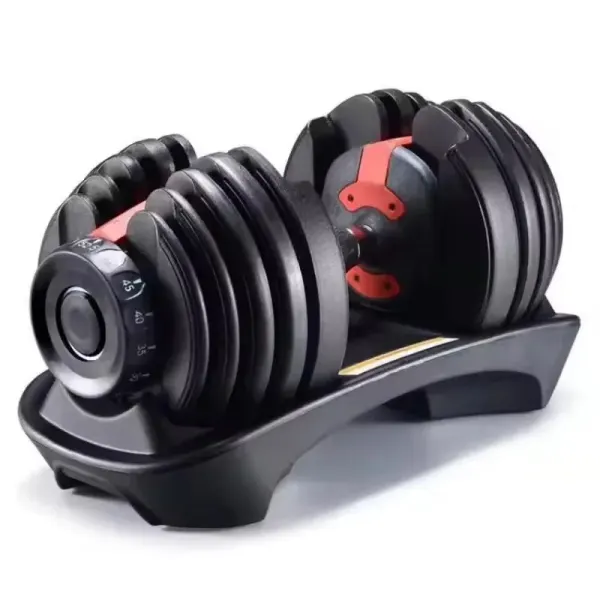
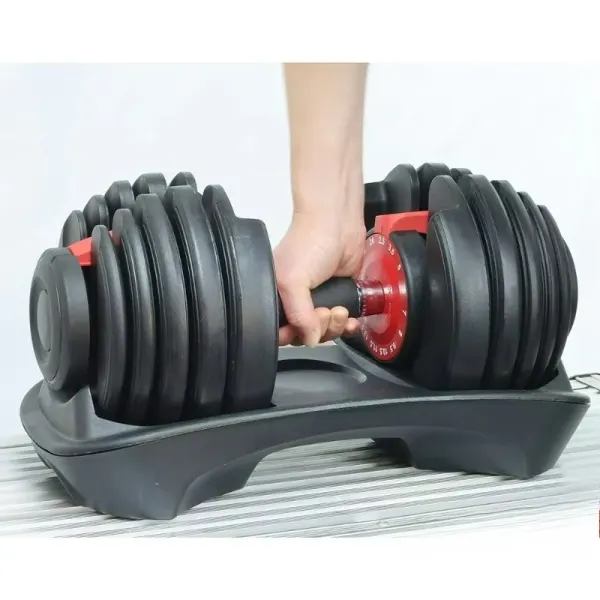
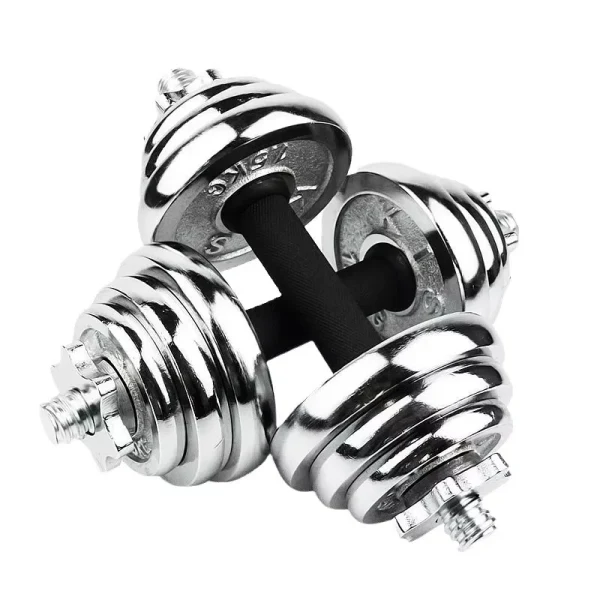
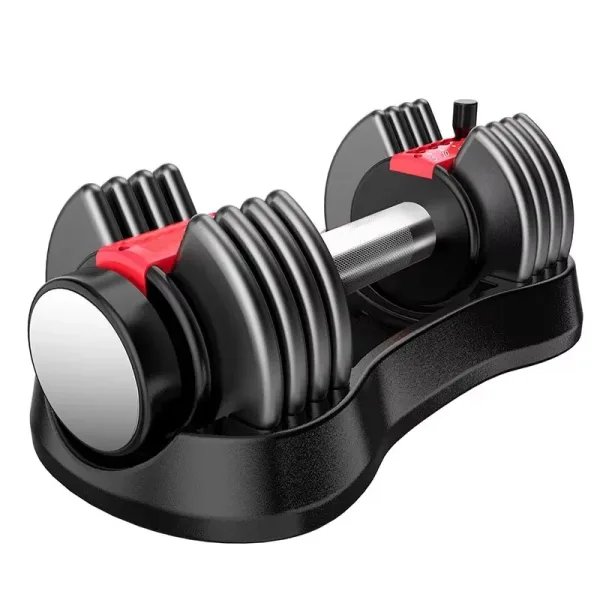
Dial systems have a knob on each end that you twist to pick a weight, and the handle lifts only the plates you selected while the rest stay in the cradle. They are the fastest to change and the most compact, but the internals are plastic and gears, so a cheap one can jam or strip if you drop it. Pin or lever systems slide a pin through the stack to lock a weight, a little slower but usually more robust. Spinlock is the old-school design: a threaded bar with plates you add by hand and lock with a screw collar. It is the cheapest and most durable by far, with almost nothing to break, but every weight change means unscrewing, adding plates and screwing back, which gets tedious mid-workout. If you value speed and space, buy a dial. If you value durability and a low price, spinlock is honest and hard to kill.
What actually matters when you buy
Look past the headline weight and check the range and the increments first. A set that jumps in five kilo steps is too coarse for curls and shoulder work, where two or two and a half kilo steps let you progress sensibly. Check the maximum weight per hand is enough to keep challenging you for a year, not just today. Read the handle diameter and knurling, because a smooth or too-thick handle kills your grip on rows and deadlifts. Then read the reviews specifically for two words: rattle and accuracy. Cheap dial sets often rattle at the plates, and some sets weigh noticeably less than the number printed on them, which reviewers will tell you if you look. Finally, check the changeover: how quickly and safely you can go from one weight to the next between sets.
AliExpress price bands and what you get
Under twenty dollars a pair you are almost always looking at spinlock sets or very light dial handles, fine for beginners, curls and rehab work but limited in top weight and slow to change. Between twenty and sixty dollars is the sweet spot for most home lifters: solid spinlock kits with plenty of plates, or entry dial and pin sets with a usable range up to twenty or twenty-four kilos a hand. Above sixty dollars, and up toward the hundred and fifty dollar mark, you find the heavier dial systems with wider ranges, steel internals and better handles that feel closest to the premium brands. Spend to match your training, not the listing photo: a well reviewed forty dollar set beats a flashy one that arrives rattling.
Space, safety and protecting your floor
Adjustable dumbbells are dense and they land hard. Never drop a dial set, because the mechanism is not built to survive being slammed on the floor loaded, and a dropped plate can crack the cradle or your tiles. Put down a rubber mat or a couple of cheap foam tiles where you train, which protects the floor, the dumbbells and the neighbours below. Keep the cradle or storage tray on a stable low surface so you are not lifting the full stack off the ground each time. Check the collars or dials are fully locked before every set, especially on spinlock bars where a loose collar lets plates slide off mid-rep. A few seconds of checking prevents the one accident that these weights can cause.
Who should skip adjustable dumbbells
They are not for everyone. If you train heavy and want to throw the weights down after a hard set, fixed rubber dumbbells or a barbell suit you better, because adjustables do not like being dropped. If your budget is tiny and you only need light resistance, a set of resistance bands does more for less. And if you already have a full rack at a gym you attend regularly, a home pair is a convenience rather than a need. But for the large middle group, people building a compact home gym who want a wide range of loads without a wall of metal, a good adjustable pair is one of the best value buys in home fitness.
Frequently asked questions
Are cheap adjustable dumbbells accurate on weight? Often close but not exact. Budget sets can read a little under the printed number, and spinlock plates vary between batches. It rarely matters for home training as long as you progress consistently, but read the reviews if exact loads matter to you.
Dial or spinlock for a beginner? Spinlock if money is tight and you do not mind the slower changes, because it is cheap and almost unbreakable. A dial set if you want fast changes and a tidy setup and can spend a bit more. Both work; the dial is convenience, the spinlock is value.
What weight range should I buy? For most people a range up to about twenty to twenty-four kilos per hand covers years of home training on the main exercises. Make sure the small increments exist too, so curls and shoulder work can go up gently rather than in big jumps.
Will they damage my floor? They can if you drop them, especially dial mechanisms. Train on a rubber mat or foam tiles, set the weights down rather than dropping them, and your floor and your dumbbells both last far longer.
Adjustable dumbbells are one of the smartest buys for a home gym: one compact pair, a full range of loads, and far less money than a rack of fixed weights. Pick the mechanism that fits how you train, a dial for speed and space or spinlock for durability and price, check the range, the increments and the handle before you buy, and read the reviews for rattle and honest weight. Put a mat down, lock the collars every set, and do not drop them. Get that right and a forty dollar pair from AliExpress will carry your training for years, which is exactly what a good piece of home gym kit should do.